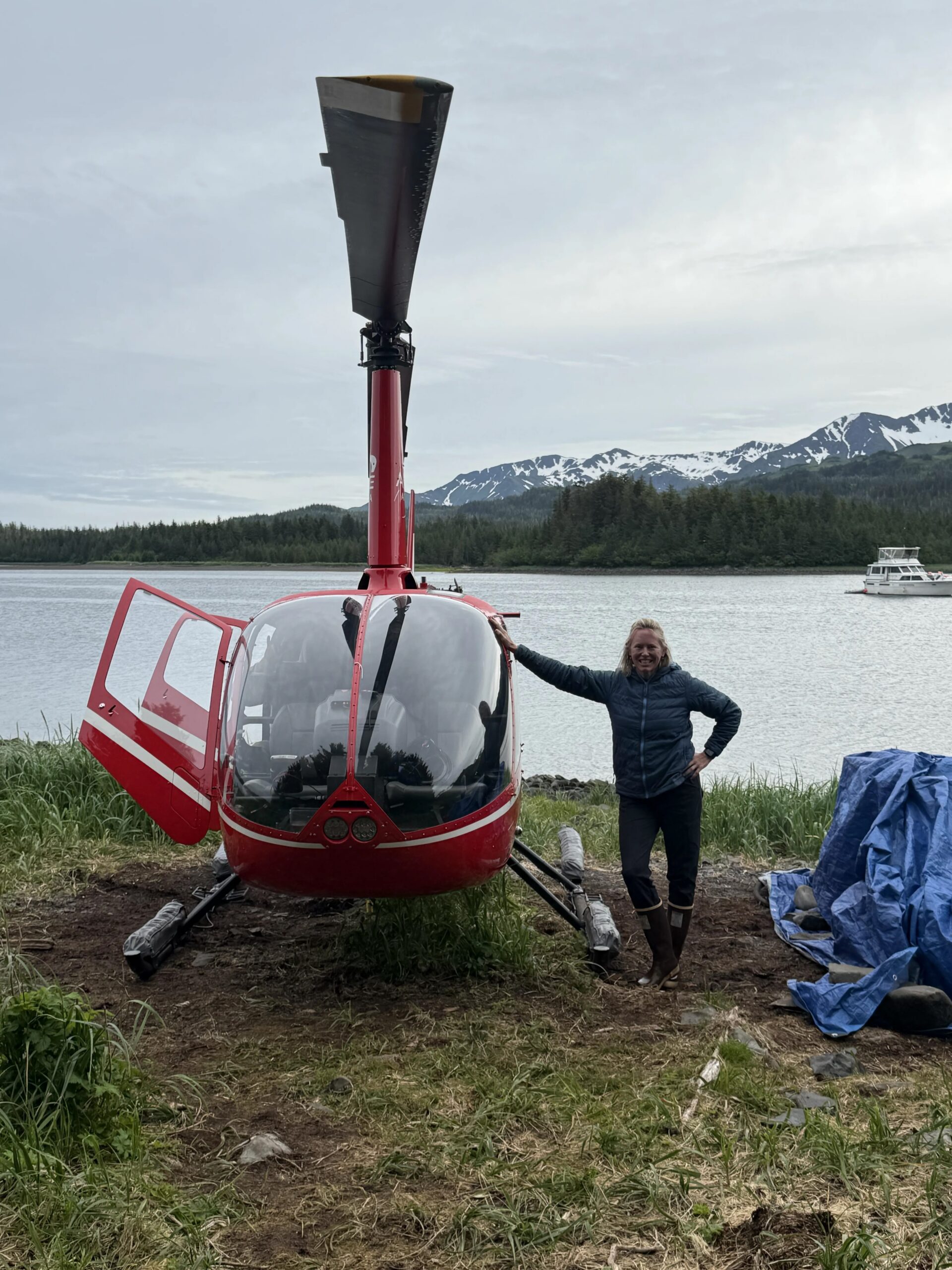
From the helicopter, Montague Island looks like paradise. Erinn grew up flying over this exact stretch of coast with her dad, heading out to fish, and when she talks about the place, the first thing she reaches for is how stunningly gorgeous it is. In the summer, the whole island is lush and green right down to the waterline, and there are no towns or roads or people anywhere on it.
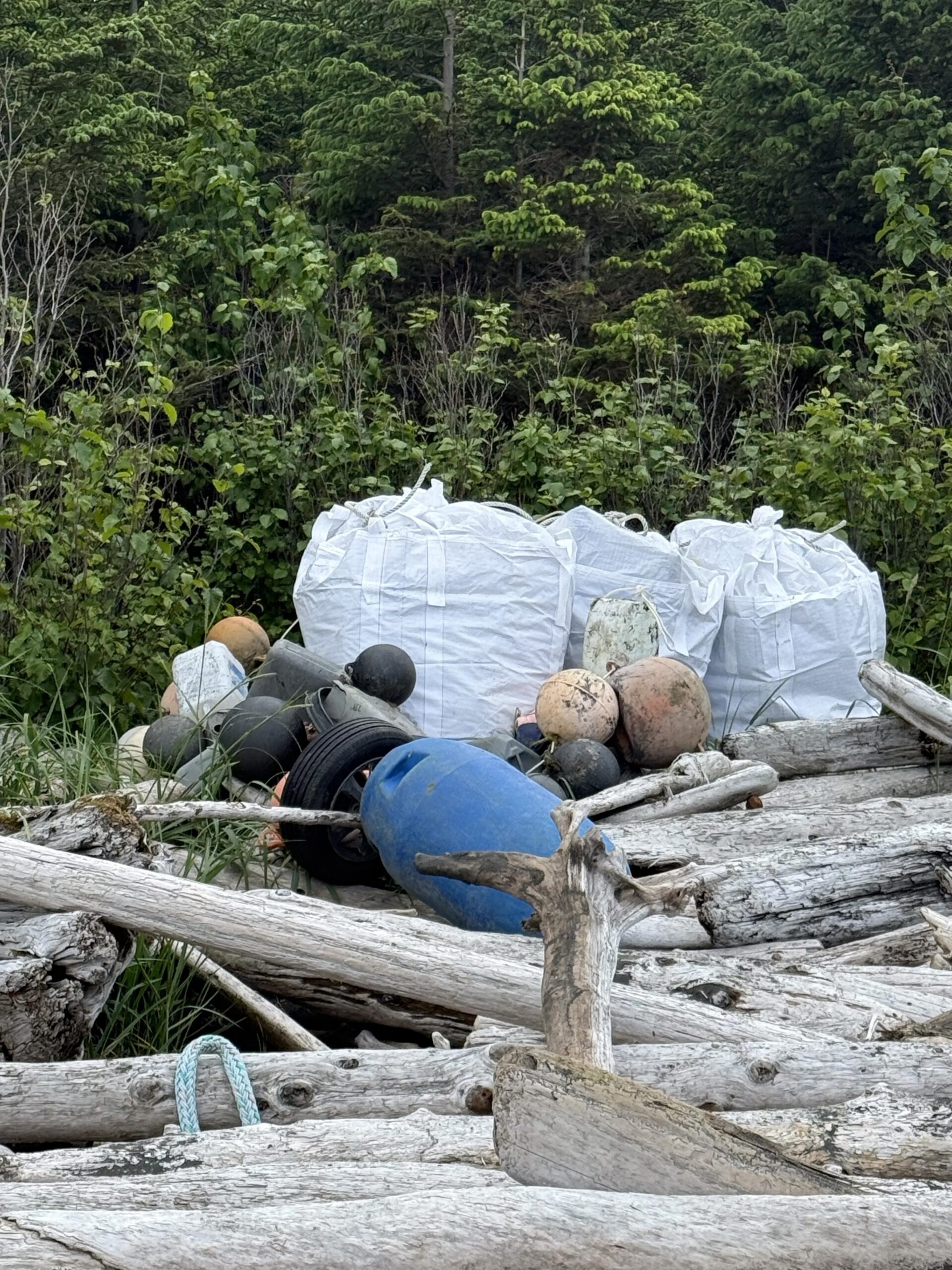
You also see something else. There are rows of giant garbage collection bags called Super Sacks lined up along the shore, visible from the air before you even touch down, and styrofoam pushed up into the tree line, and buoys and buried nets tangled into the driftwood, and water bottles by the thousands. The Montague coast faces the Gulf of Alaska, and the currents carry garbage from across the Pacific and set it down, directly, here.
This is where Erinn spent a week of her summer. Most of us would take time off, do as little as possible, and enjoy a break. Erinn flew to a remote beach to haul garbage off it by hand.
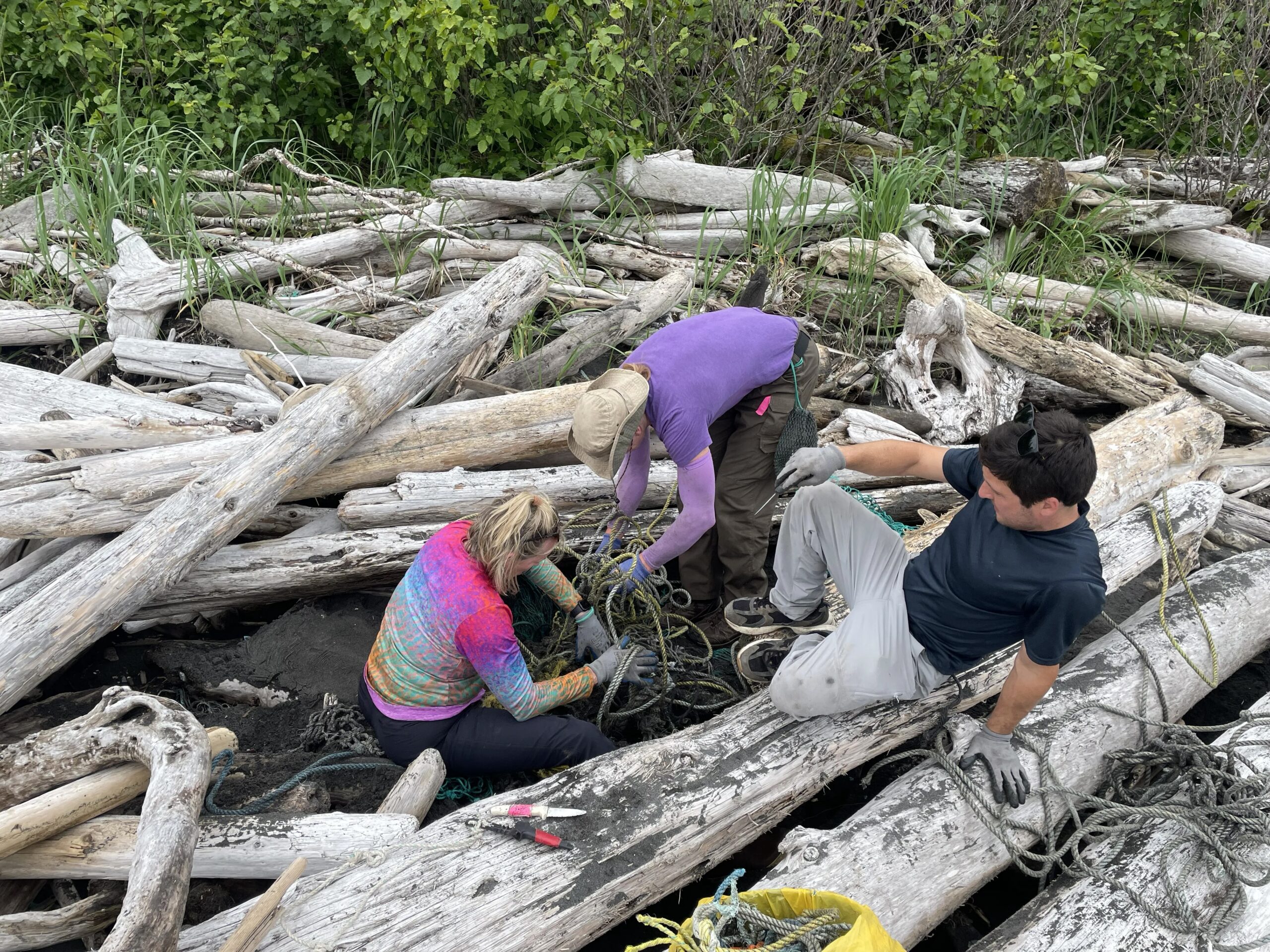
She volunteered with Gulf of Alaska Keeper, the oldest marine debris cleanup organization in the country. For 25 years, GoAK has cleaned more than 1,500 miles of Alaskan coastline and removed over 5 million pounds of debris from it. Crews rotate throughout the season because there is so much to collect. Erinn was one of many crew members, prying nets out of log piles, pulling plastic from the sand by hand, filling bags large enough to hold ten people, each one flown out by helicopter to a barge offshore.
She lived aboard a boat for the week, flying to the beach each morning to work long days in the weather and flying back at night with no shower waiting for her. The heavy, repetitive labor left her hands swollen a full week after she came home. I will be honest, this is not work I would ever sign up for, and that is part of why it moves me that she did.
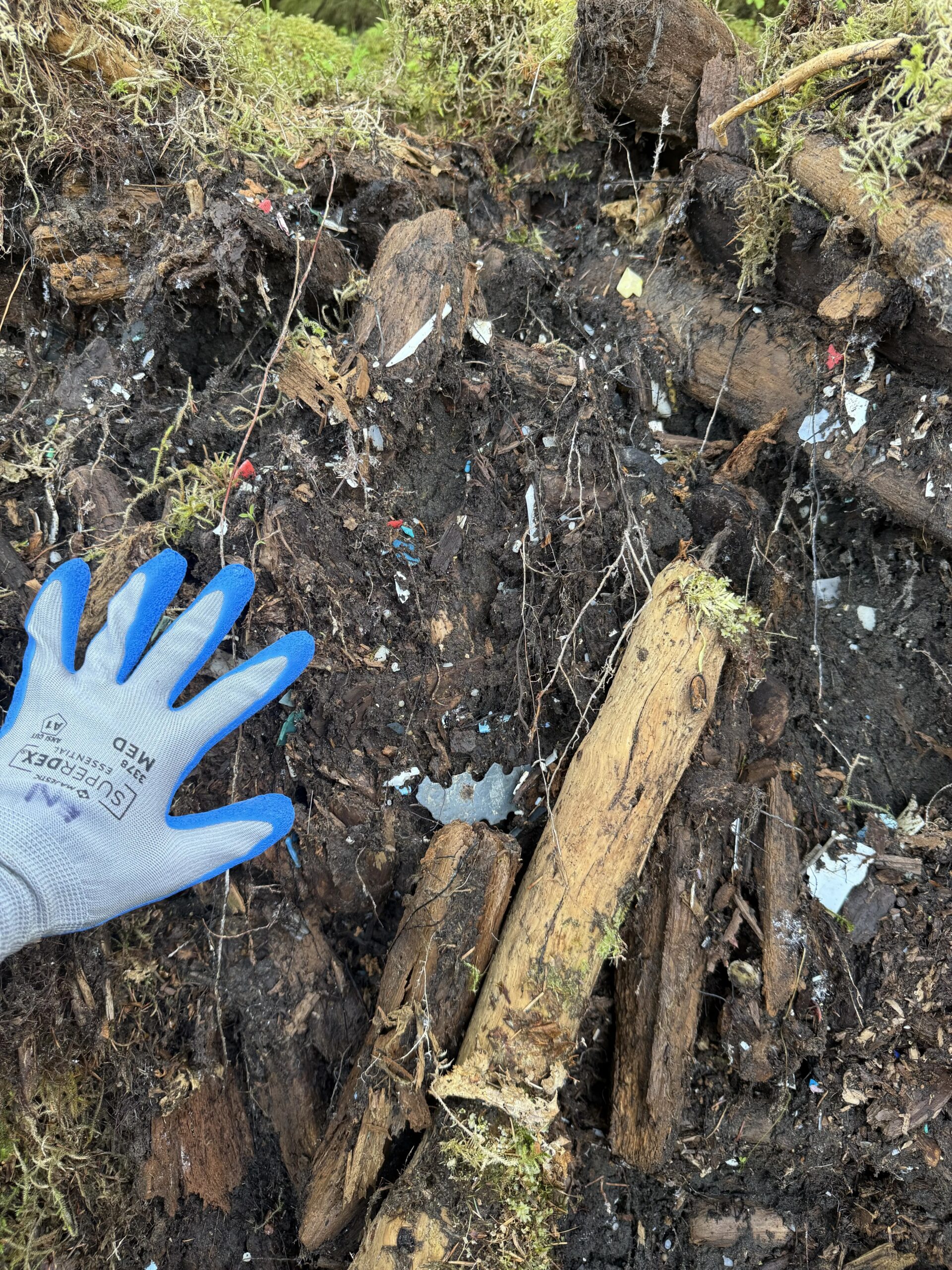
Erinn calls it "doing her small part." It feels that way to her because the work is endless, but her part was not small. And what stays with me is something she noticed about time. She has watched this coast her whole life, and microplastics are new to it, the last fifty years or so. She cleaned near a fallen tree where the roots had torn up the soil, and the earth itself was full of tiny broken pieces of plastic, ground so far in there was no picking them out. Everything she pulled off that beach was made in her lifetime.